
SpaceX Planetary Protection
Forward planning is the best way forward

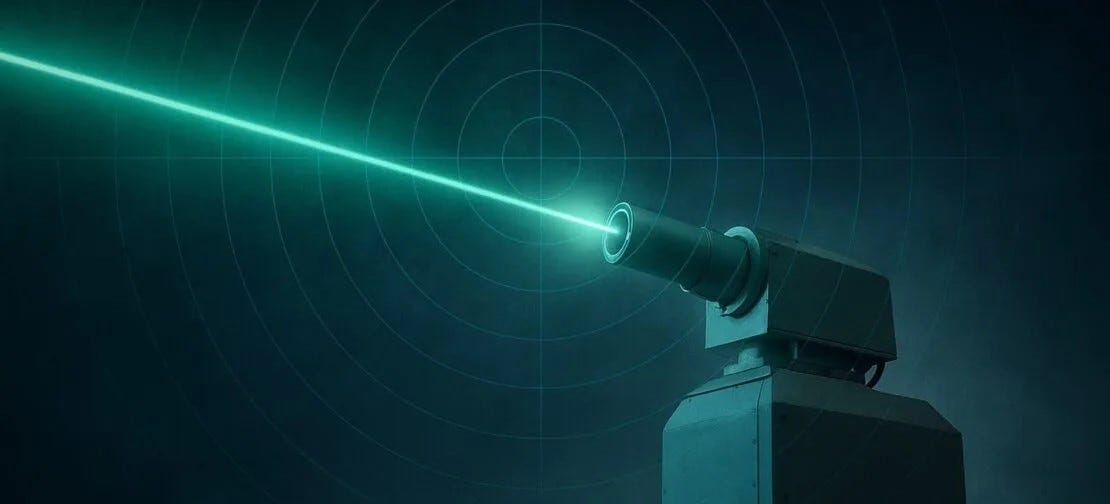
SpaceX was built to make life multi-planetary, so the technologies they develop must support this company mission. Rocket reusability, manned spacecraft, orbital infrastructure and super heavy landers are all core technologies for settling new worlds. Intriguingly SpaceX are heavily involved in Golden Dome, despite having plenty of work on their plate and a surplus of finance. Hence they must have another application for this ballistic defense technology, to solve a second order problem related to space settlement.
Golden Dome Awards
Ideally Golden Dome will intercept ballistic missiles before they launch or during the boost phase, quite a challenge considering the system must cover the whole world. Currently SpaceX has 2 key contracts for the Golden Dome Program, i.e. to provide airborne target tracking, and satellite communications. Essentially Starshield satellites will track potential targets, then relay this information via the Starlink constellation. SpaceX has also bid for the orbital interceptor work, the final segment of this ballistic defense network, so they are pursuing every major part of this program.
Dual Utility
While Golden Dome is intended to shoot down nuclear missiles, it could be repurposed to intercept incoming asteroids, like a point defense system for Earth. Instead of interceptor missiles, Golden Dome will likely employ high energy lasers or masers, because they cover larger areas and don’t run out of ammunition. Fortunately asteroids are packed with frozen volatiles, hence will out-gas when heated, altering the asteroid’s point of impact. However, if these gases can’t escape the internal pressure could shatter the asteroid completely. Alternately some asteroids are rubble piles, so if sufficient heat is applied the asteroid would disintegrate into smaller fragments, to burn up in the atmosphere. Overall seems wise for SpaceX to build such a system, although their application lies a lot farther from Earth.
Space Settlement
To become a multiplanetary species, SpaceX intend to build substantial settlements on the Moon and Mars using their Starship Super Heavy Lift (SHL) vehicle. Unfortunately Mars has a vestigial atmosphere, unlikely to stop anything larger than a micrometeorite, and the Moon has an exosphere, offering no appreciable protection. Hence settlements on either world will need some form of meteor defense to ensure their longterm survival. NASA estimate ~50 tons of meteoric material falls on Earth each day, so expect a comparable amount for the Moon, and possibly more on Mars, which orbits closer to the asteroid belt. Fortunately minimal atmosphere is ideal conditions for a laser or maser based defense system. Even the Starshield satellites could be used to detect incoming meteors, which reflect the suns heat, making them highly visible to infra-red tracking. Overall this implies SpaceX has a good grip on the basic technologies needed to settle other worlds and has now advanced to second order problems.
Assured Access
Numerous defense contractors are breathing down the Pentagon’s neck for the golden interceptor work, so it won’t necessarily go to SpaceX. However, if someone else lands the contract they will have to share their interceptor schematics with SpaceX to ensure system compatibility. In addition, SpaceX handles the majority of defense payloads, hence able to inspect the interceptor hardware prior to launch. It seems, one way or another, SpaceX will become familiar with every aspect of Golden Dome for Earth, making it relatively easy to re-engineer for the Moon and Mars.
Fast Defense
The first settlements on the Moon and Mars will consist of a cluster of Starship vehicles, hence vulnerable to meteor impacts due to their height and pressurized volume. Fortunately SpaceX could set-up a meteor defense system fairly quickly using the same basic technology. A Version 4 Starship can carry 200 tons, so could land a complete defense system relatively close to the settlement, ready for operation. For example: the lunar settlement will be located at the lunar South Pole, so a dedicated defense Starship could land on a peak of eternal light, to ensure continuous solar power. A high energy laser or maser, fitted on a turntable in the payload section, could cover most of the sky, similar to a telescope observatory. The turntable could also carry a large solar array, to maintain the best aspect to the sun as the moon rotates, allowing megawatt-hours of energy to be accumulated over time. Realistically meteors approaching from the direction of the sun would be less visible, so provide less warning time, but the laser/maser would be continuously pointed towards the sun hence able to react relatively quickly. In addition to meteors, this system could also defend against space junk, an emerging problem in cislunar space, due to increased lunar activity.
In Conclusion
SpaceX are serious about space settlement, considering they are currently solving first and second order problems. Hopefully their settlement defense system will only be used against meteors, although a good capability to have in an uncertain world.
The company is committed to building cities on distant worlds, and willing to go out of their way to protect their people. Overall SpaceX has demonstrated they have the will, finance and commercial means to develop all the basic technologies needed for space settlement.