
Starship Last Test Flight
Starship is going operational

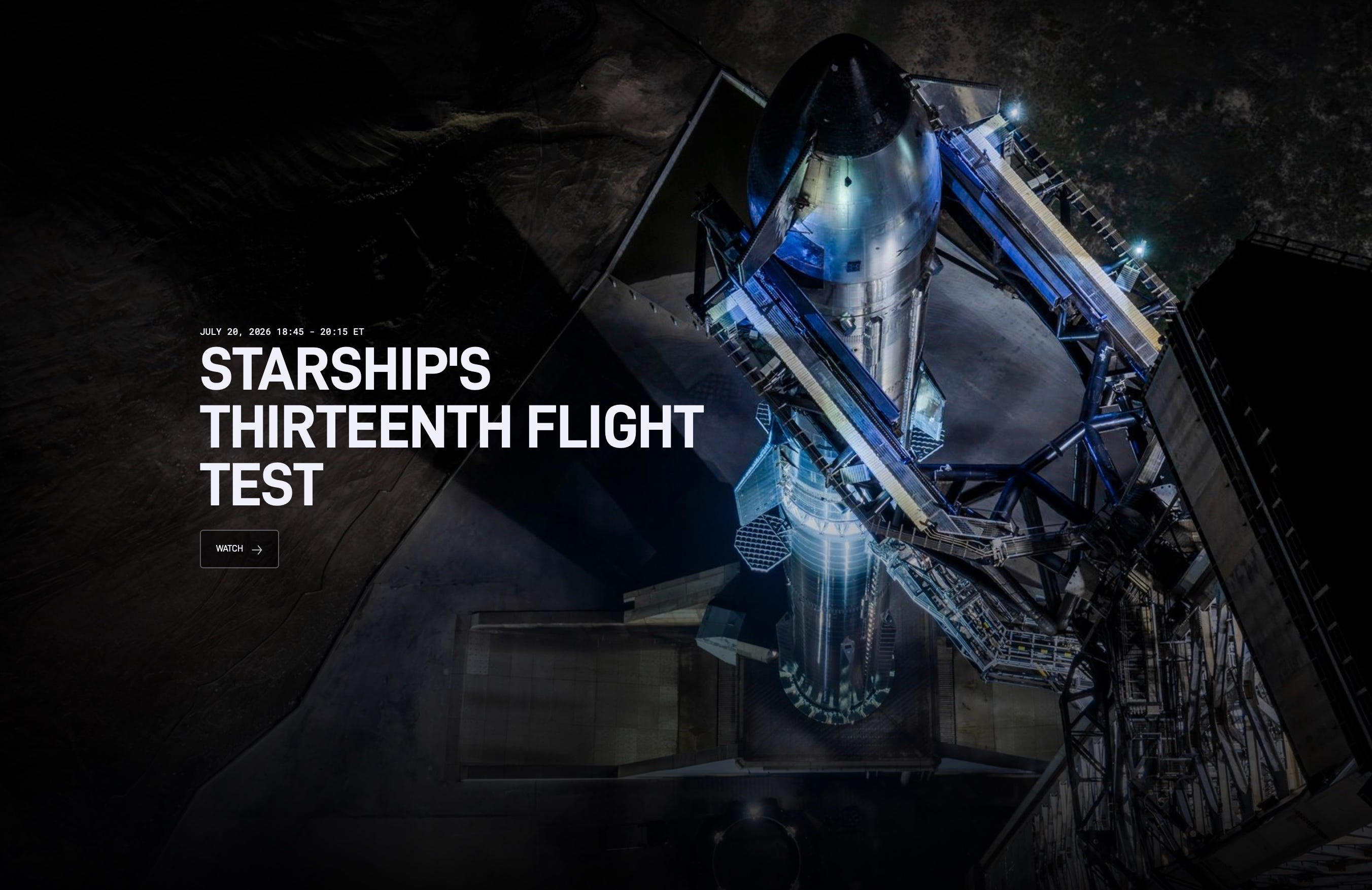
On July 24, Starship ascended smartly from the pad, with no discernible issues. Rocket engineers say any design flaws usually manifest in the first 2 flights, and this was the second flight of Version 3 Starship, suggesting the design is sound.
Many improvements were made to the B20 Super Heavy booster and S40 Ship following Flight 12: -
Engine restart – the Super Heavy engines had hardware and software modifications to reduce overheating and improve their re-light capability (e.g. error tolerance increased to reduce engine aborts during startup).
Staggered startup – the Ship’s vacuum engines started on one side first during hot staging. This ensured Super Heavy rotated back towards the launch site after stage separation.
Engine reliability – the Ship engines had hardware and operational changes to reduce engine-outs.
Launch vehicles are highly tuned so any modification could potentially cause a Rapid Unscheduled Disassembly (RUD), hence Starship proved its overall robustness, considering the many changes.
The vehicle was certainly tested on Flight 13, considering it accelerated hard from the start. This increased speed at Max-Q (when the vehicle experiences maximum aerodynamic pressure), which increased stress on the entire vehicle.
“This flight intentionally had much higher acceleration to test how well the heat shield tiles would remain attached at high dynamic pressure. Test was successful.” ~ Elon Musk/X
In addition, Starship has to fight gravity all the way to orbit, so getting there faster reduces the amount of propellant used to counter gravity, meaning the vehicle can lift more payload (i.e. an extra 6-7 tons).
First Operation
For the first time Starship carried an operational payload, i.e. 20 V3 Starlink satellites, which were successfully deployed into sub-orbit.
“The first Starlink V3 satellites in space successfully deployed their solar arrays, fired their thrusters, established connections with the Starlink constellation using radio frequencies and laser links, and captured imagery of Starship.” ~ Starlink/X
No doubt each satellite varied slightly to determine the optimal design, before they launch 100,000 V3 satellites, which have 10X the bandwidth of the current design.
After 6 of these satellites inspected the heat shield tiles, the Ship executed a brief deorbit burn, then performed a controlled entry, descent and landing in the Indian Ocean. The Ship used 2 engines for touchdown, to provide offset thrust, ensuring it floated belly side up. This provided excellent views of the heat shield tiles which appeared in good condition, except for some white streaks caused by ablated Kaowool underlay.
“We got all the heat shield data we needed and then some!” ~ Elon Musk/X
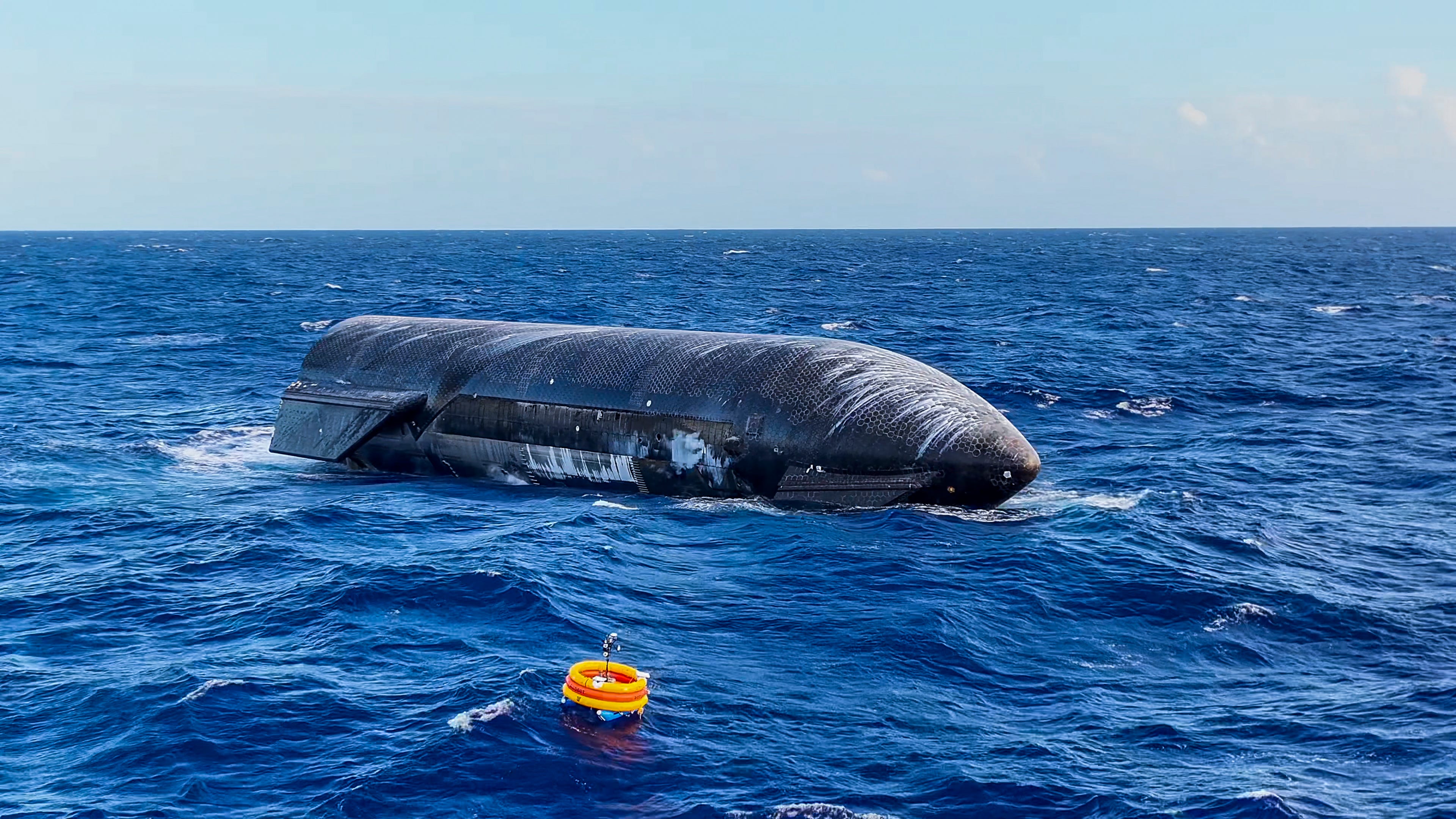
Thanks to the soft landing, S40 effectively became a ship, so SpaceX decided to salvage it.
“We’re sending a ship out to recover Starship.” ~ Elon Musk/X
Booster Recovery
Super Heavy lit all 33 engines for its boostback burn but only managed to relight 8 out of 13 engines for the landing burn – which then reduced to 5. This meant Super Heavy hit the water at ~30 m/s, a big improvement over Flight 12 as the booster was still supersonic. Super Heavy reenters the atmosphere at hypersonic velocity engine first which might explain why some engines failed to ignite. Hence SpaceX will probably perform another booster sea landing on Flight 14, and not risk damaging the chopsticks, which have a far more important job...
Orbital Operation
Production is accelerating at Starfactory, with Ship 21 and Super Heavy 41 close to completion, which suggests the next launch should be in August. For Flight 14 Starship will ascend to orbit for the first time, and deploy 20 fully operational Starlink satellites. Then they’ll deorbit the Ship and attempt to catch it with the chopsticks, another first for Starship.
SpaceX successfully recovered and reused 2 Super Heavy boosters on Version 2, so if they manage to recover the Ship they can reuse the entire launch vehicle. Realistically the first stages they recover will be stripped down to determine which parts need to be reinforced, or lightened to save weight. However, when SpaceX begin to reuse Starship, their launch rate should double due to the number of launch vehicles available, then double again with the next reused vehicle.
Orbital Refueling
When Starship can be fully reused, SpaceX will begin orbital refueling flights, likely before the end of 2026. Fortunately they will have 2 Starship pads available for these flights, OLM-2 at Starbase and LC-39A at the Cape. Likely one will launch a Target vehicle, quickly followed by a Chaser vehicle from the other. Then these vehicles will attempt to dock together in orbit, and transfer a large quantity of cryogenic propellant (50+ tons). Essentially these Starship derived vehicles are prototypes for the Propellant Depots and Tankers SpaceX will use to send Starship to the Moon and Mars.
In Conclusion
SpaceX’s strategy of iterative development is finally bearing fruit, with full reuse within reach. All being well, Starship will soon enter service, and send thousands of Starlink V3 satellites to orbit, to meet the surge in demand.
NASA rely on Starship for the Artemis Program and their faith in SpaceX seems well founded. While nothing is certain in rocketry, flexible development, fast production and redundant launch facilities go a very long way.