
NASA Accelerate Artemis
NASA reorganization and competition will accelerate moon landings

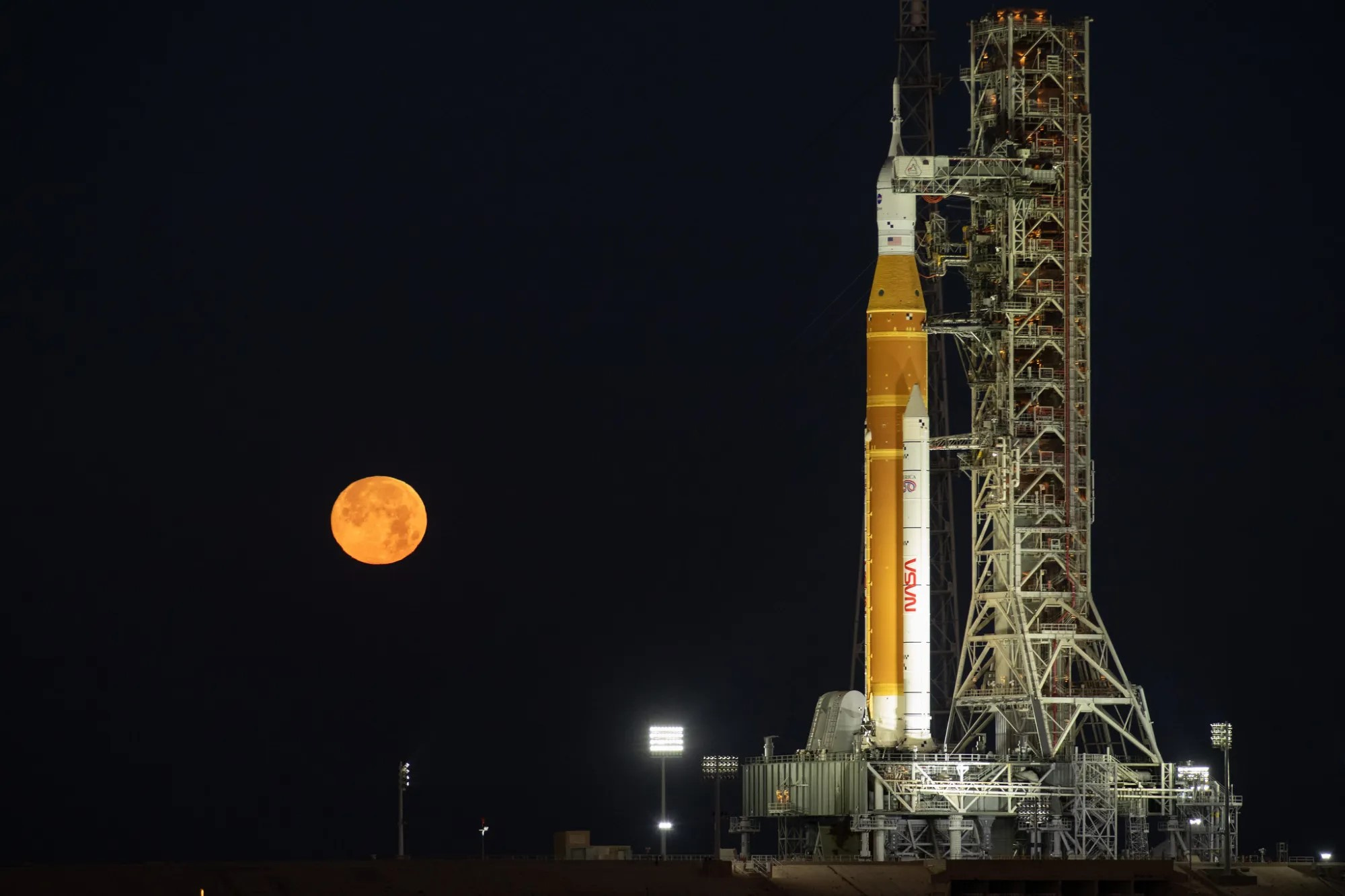
Behind the scenes NASA is rebuilding itself to improve overall performance. The Artemis Moon landing program is in the doldrums, with test flights occurring every 3+ years, compared to every 3 months for comparable Apollo missions. NASA now plans to standardize the Space Launch System (SLS) to allow one launch every year, putting moon landings back on track for 2028.
New Broom
“NASA must standardize its approach, increase flight rate safely, and execute on the president’s national space policy. With credible competition from our greatest geopolitical adversary increasing by the day, we need to move faster, eliminate delays, and achieve our objectives.” ~ NASA Administrator Jared Isaacman/Ars Technica
Isaacman has completed his initial 60 day review of NASA and begun a management shakeup. This lit a fire under Artemis managers who previously accepted poor performance from their contractors. Prime contractor Boeing has already agreed to accelerate the SLS launch schedule, starting with an extra flight in mid-2027, designated Artemis 3.
Competition is Key
For the Artemis 3 mission, SLS will launch an Orion capsule to low Earth orbit and rendezvous with one or more Human Landing System (HLS) vehicles. These Starship and Blue Moon landers are produced by SpaceX and Blue Origin respectively, and whoever manages to successfully dock with Orion will be used for the Artemis 4 moon landing and subsequent missions. SpaceX and Blue Origin have extensive plans for the moon, hence will pull out all the stops to ensure they’re ready for Artemis 3.
After docking with the lander, NASA will use its airlock to test lunar surface spacesuits. Currently these suits are being developed by Axiom Space, then leased to NASA for Artemis missions. Originally Collins Aerospace was contracted to develop a competing suit, until they decided to drop out in 2024. Intriguingly, SpaceX has independently developed their own spacesuit, which Isaacman successfully tested on his private Polaris Dawn mission. No doubt Isaacman would prefer to test the latest design SpaceX suit on Artemis 3, to restore competition with Axiom.
This emphasis on competition is not isolated to commercial space companies. SLS contractors Boeing, Lockheed and Northrop know competition is coming from commercial providers who offer a higher flight rate at lower cost. Hopefully this should improve the performance of these legacy aerospace companies who wish to preserve their NASA contracts, until the switch to commercial becomes unavoidable.
Why the Rush
“Launching a rocket as important and as complex as SLS every three years is not a path to success. When you’re launching every three years, your skills atrophy.” ~ Jared Isaacman/Spacenews.com
Operating SLS every 3-4 years starves the workforce of practical experience, leading to unnecessary delays and poor safety. In addition, the normal churn of technicians, engineers and managers means they are lucky to experience a single SLS operation from start to finish. By contrast SpaceX launch Falcon 9 safely every few days, with virtually no delays except for the weather.
China want to send taikonauts to the moon by 2029, and build a moonbase the following decade. If Artemis is delayed they could claim the entire lunar South Pole, a region of strategic importance for lunar operations. However, if Artemis landings occur first, fair division of this region should follow, allowing both nations to establish bases, and the lunar economy to flourish.
Why the Delay
Traditionally NASA has contracted legacy companies to fabricate the hardware systems they require. Unfortunately these are usually cost plus profit contracts, which means the more these systems cost the more profit the companies make, because profit is proportional to cost. Thanks to this contracting anomaly, these aerospace companies have developed a whole bag of tricks to increase production cost. For example: Boeing employ a quarter of the technical staff required to build SLS in order to slow production as much as possible, which leads to higher cost and higher profit.
Until now NASA tacitly approved this behavior because there was no alternative to legacy suppliers. Fortunately commercial space companies use fixed price contracts, which incentivize fast delivery. Overall Isaacman has inherited a difficult position as NASA relies on legacy to reach the moon first, while transitioning to commercial suppliers to achieve their longterm goals.
SLS Sunset
NASA has effectively frozen SLS development to accelerate production, with one exception. The upper stage has insufficient performance for Orion to reach low lunar orbit, something required for safe surface operations. Hence NASA will adopt a more powerful upper stage, possibly based on the Centaur V used on the Vulcan launch vehicle. However, NASA won’t develop SLS further, because they intend to retire it after Artemis 5.
The Orion capsule carries 4 people and it will take hundreds to build a sustained moonbase and lunar economy. SpaceX Starship can transport 100 people at a time to the lunar surface, at high flight rate and low cost which suits NASA down to the ground.
Parochial Politics
NASA development programs like Artemis are heavily influenced by regional politicians in congress, who direct the necessary funding. These representatives consistently support legacy companies, hence turned a blind-eye when SLS slowed to a crawl. However, Isaacman has somehow galvanized these politicians to produce The NASA Authorization Act of 2026, which endorses his proposed actions to accelerate the Artemis Program.
“Our bill authorizes critical funding for, and gives strategic direction to, the agency in line with the priorities of administrator Isaacman and the Trump administration.” ~ Senator Ted Cruz
In Conclusion
Jared Isaacman took a holistic approach to remedy Artemis. SLS bottlenecks have been removed both inside and outside NASA, allowing the launch rate to increase to one per year.
Barring accidents, Artemis moon landings should commence in 2028 and prepare the ground for base-building to begin the following decade. Commercial space companies kept the ISS flying, now it’s time to spread their wings.
I love the new space race! We are just a few years from two of Earth’s civilizations walking on the Moon. How cool is that?
Cancelling SLS Block 1B alone probably won’t accelerate an American lunar landing much, if at all.
A new stage for SLS needs to be selected, adapted, and human-rated. Still, it does make it possible to free up some funds that could be used to accelerate work on ships and suits.
I think the real tell will be what happens with the Lunar Gateway. I have always viewed this outpost as unnecessary; it would be better to re-purpose some of that hardware to replace the ISS.
I just finished an essay on China’s Lunar landing architecture, which I will publish at Risk & Progress soon. Who do you think will return to the Moon first? The US or China?